Journey Music for Psychedelic Healing Playlists: Pan·American & Kramer — Reverberations of Non-Stop Traffic on Redding Road (2024)
A fingertip on a string. A faint shimmer of delay. And then the room begins to shift. Reverberations of Non-Stop Traffic on Redding Road doesn’t guide so much as place you somewhere and wait. Short pieces open small, contained spaces where attention can drift, settle, or follow subtle movement. For psychedelic journeys, it fits best in the early and middle phases, offering a quiet, non-directive field where curiosity stays open and the listener becomes part of the space itself.
Mystical Neurodivergence: When Psychedelic Insight Feels Like Truth - Mystical Experience, Belief Formation, and Staying Grounded
Mystical experiences can feel more convincing than ordinary thought. They arrive through the body and carry a quiet certainty, as if something has been revealed rather than imagined. Psychedelics can intensify this sense of knowing, making insight feel undeniable. In the moments that follow, the mind begins to organize meaning around the experience. What starts as a flexible insight can gradually take shape as belief, sometimes expanding a person’s life and sometimes narrowing it. Learning to recognize that shift is central to staying grounded as these experiences unfold.
Mystical Neurodivergence: Categories of Transpersonal States: A Quick Visual Reference
Psychedelic experiences can reorganize perception in ways that feel immediate and true. This visual map outlines core categories of transpersonal states, including unity, ego dissolution, and shifts in time, meaning, and identity. Organized across boundary, structure, and agency domains, it offers a grounded framework for recognizing and working with these experiences in clinical and integration settings.
Mystical Neurodivergence: A Primer on Mystical Experiences and Transpersonal States
The sense of self begins to loosen, sometimes subtly, sometimes all at once. Boundaries soften. Attention shifts away from personal concerns toward something wider, harder to name. Meaning doesn’t arrive through thought alone. It feels encountered, immediate, carrying a kind of certainty that can be difficult to question in the moment. Across research and lived reports, these experiences follow recognizable patterns. Unity. Dissolution. Insight. Reorganization. Each opens something. Each asks for careful integration once the experience fades.
Who Holds the Sound? Reciprocity and the Music Behind Psychedelic Healing
A person lies down. Eyeshades on. Headphones resting lightly over their ears.
For the next several hours, music becomes the steadiest presence in the room. It carries them through fear, memory, and release, shaping the emotional arc in ways that are often felt more than noticed. Years later, a single track can bring the whole atmosphere back. The body remembers.
And yet, the people who made that possible are rarely part of the conversation.
The music stays. The artists often fade from view.
Before the Playlist: How vinyl, tapes, CDs, and early listening technologies shaped psychedelic journeys
Before streaming and endless playlists, psychedelic journeys unfolded inside the limits of physical media. Vinyl had to be flipped. Tapes hissed and repeated. CDs sharpened every edge of sound. These formats shaped more than convenience; they structured the emotional rhythm of the experience, introducing pauses, repetition, and moments of silence that could ground or unsettle a journey. As listening has shifted toward seamless, continuous playback, it becomes easier to design long, uninterrupted arcs. Even so, the medium continues to shape how music is felt, remembered, and woven into the inner landscape.
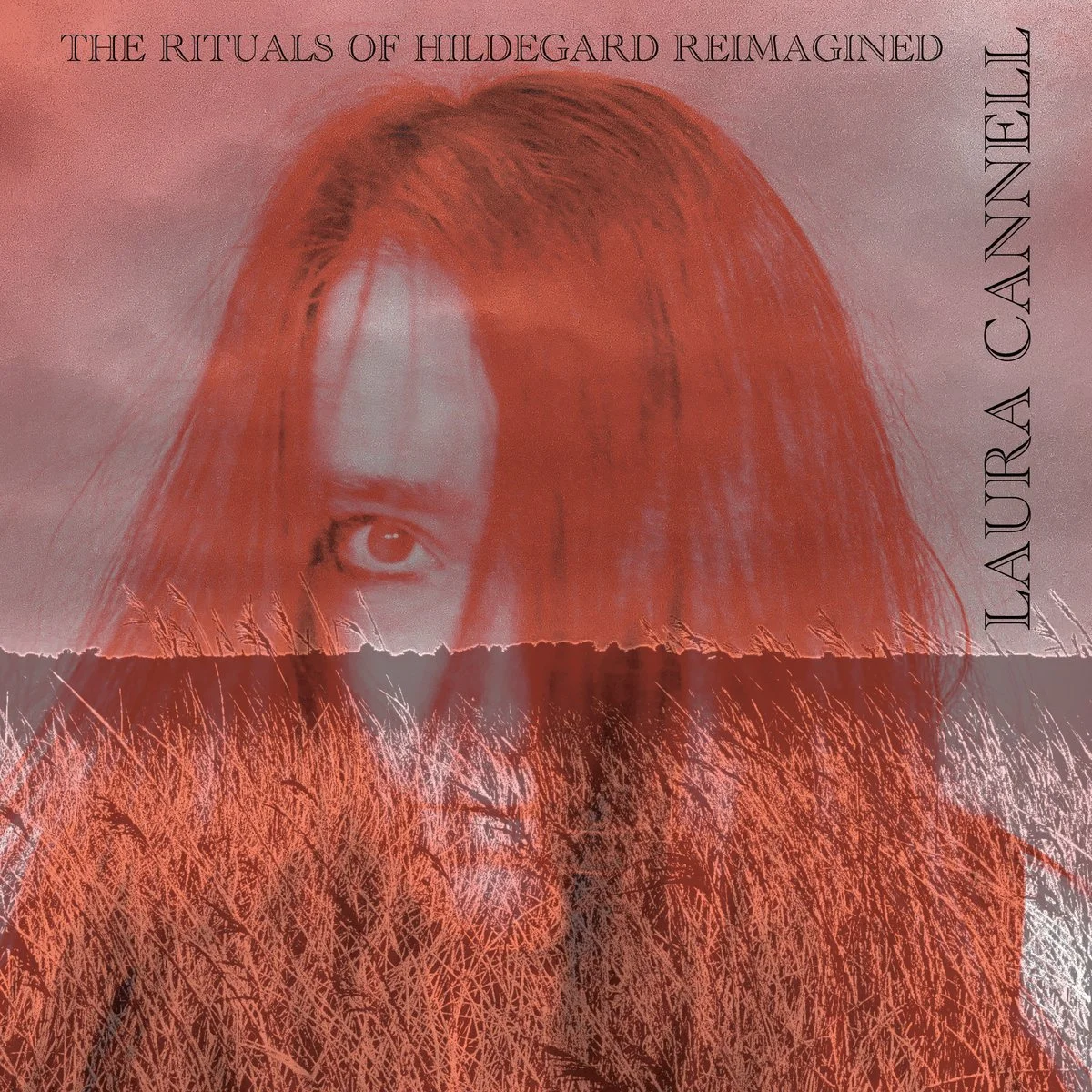
Journey Music for Psychedelic Healing Playlists: Laura Cannell — The Rituals of Hildegard Reimagined (2024)
The first notes open like the beginning of a quiet ritual. A single recorder echoes through stone acoustics, looping gently as if the music has been unfolding there for centuries.
For psychedelic listening, Laura Cannell’s sparse, breath-driven pieces create atmosphere without pressure. The music leaves room for imagination and inner imagery to emerge, opening a field where the listener can step into ritual time.
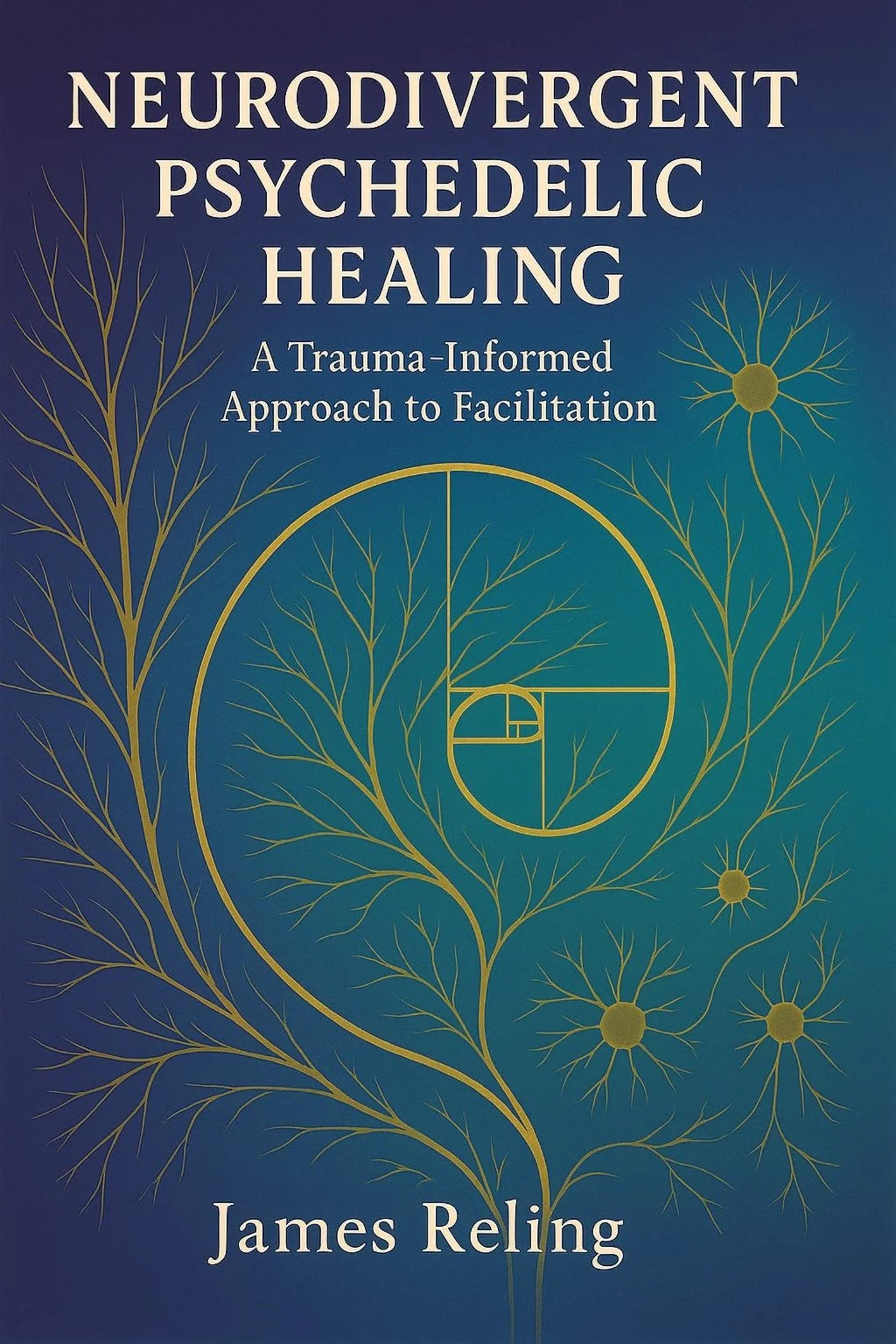
Supporting Neurodivergent Safety: Consent, Risk Reduction, and Medical Considerations - an excerpt from Neurodivergent Psychedelic Healing
Excerpt from Ch 5: Safety is the foundation of ethical psychedelic healing. For neurodivergent individuals, psychedelics can amplify sensory differences, trauma histories, and unique cognitive styles. Effective support therefore includes trauma-informed consent, thoughtful preparation, and environments that respect each person’s nervous system and agency.
Future Directions in Music and Psychedelic Therapy: Adaptive sound environments, neurodivergent listening, and the evolving design of psychedelic care
As psychedelic care evolves, new approaches such as adaptive music systems, biofeedback-driven soundscapes, and personalized listening environments may reshape how therapeutic sound is designed. Researchers and clinicians are beginning to explore how music can adapt in real time to a participant’s emotional and physiological state. These developments suggest that the future of psychedelic therapy may involve not just medicine and psychotherapy, but the intentional design of responsive sound environments.

Journey Music for Psychedelic Healing Playlists: Hammock — Nevertheless (2025)
Hammock’s Nevertheless moves the way some psychedelic journeys do, in gentle waves rather than sharp turns. Built from breathing guitar swells, slow drones, piano, and soft strings, the album feels physically present, as if it expands and settles with the listener’s breath. There is a cradling quality to the music that supports safety and embodied awareness, holding sorrow, awe, and quiet uplift side by side without urgency. For psychedelic work, this balance matters. Nevertheless neither directs nor overwhelms. It accompanies. Whether used after the peak or experienced as a full album, it offers a soundworld that feels human, attentive, and capable of holding grief and grace at the same time.
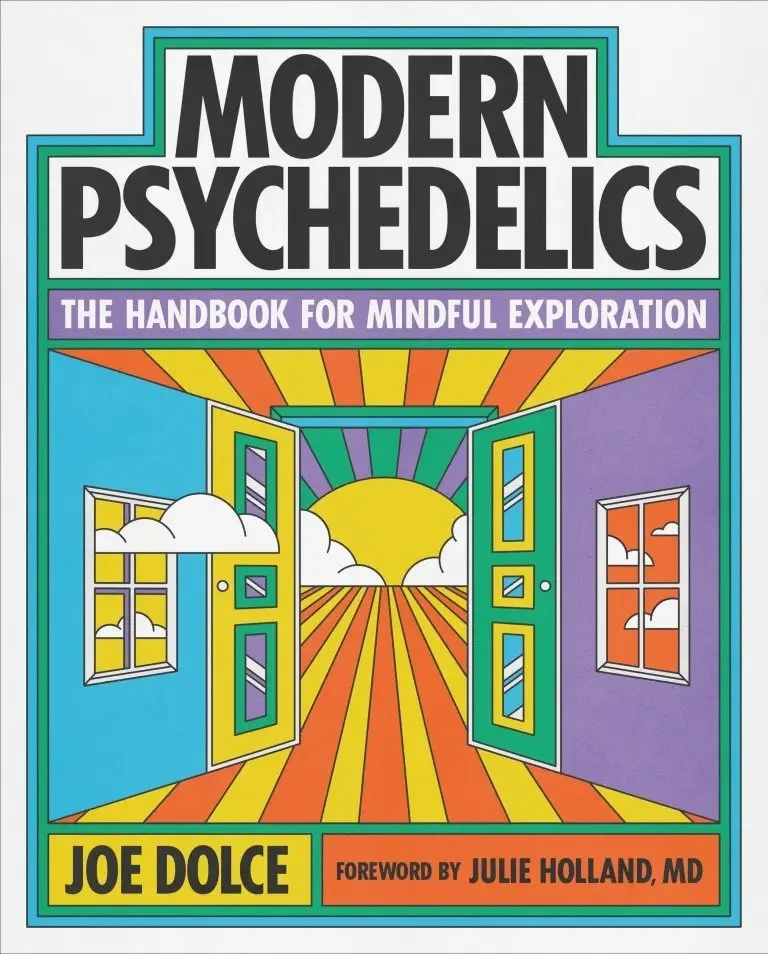
Modern Psychedelics: The Handbook for Mindful Exploration (2025) - A Psychedelic Book Review
I found Modern Psychedelics: The Handbook for Mindful Exploration quietly impressive. It brings together formal research, community knowledge, and practical guidance in a way that feels accessible without being reductive. It provides orientation, supporting discernment, preparation, and integration.
When Music Becomes the Bridge: Mystical Experience, Attachment, and Neurodivergent Psychedelic Healing
In many psychedelic journeys that lead to lasting change, there’s a moment when something opens. Time loosens. Meaning sharpens. These mystical states often mark the difference between an experience that fades and one that continues to shape a person’s life. They do not arise from medicine intensity alone, but from a nervous system that feels safe enough to let go. For many neurodivergent people, whose histories may include sensory overwhelm or chronic misattunement, that safety can be hard to access through direct relational engagement. Here, music becomes the bridge. As a low-demand, nonverbal presence, it can offer continuity and containment without requiring explanation or performance, opening pathways to surrender and meaning that are uniquely attuned to neurodivergent ways of experiencing the world.
Becoming an Inclusive Guide: Neurodivergent-Affirming Skills for Psychedelic Facilitators - an excerpt from Neurodivergent Psychedelic Healing
Psychedelic facilitators shape whether an experience feels safe and supportive, yet many lack training in neurodivergent accessibility. This chapter explores how neurodivergent-affirming skills, including sensory-aware environments, flexible communication, and affirming language, can reduce harm and deepen trust. By understanding Autism, ADHD, sensory processing differences, and intersecting identities, facilitators can create spaces where neurodivergent clients feel seen, respected, and able to engage fully in their healing process.
Journey Music for Psychedelic Playlists: William Tyler — Time Indefinite (2025)
Time Indefinite is William Tyler’s most adventurous and emotionally unsettling work to date. Built from cassette loops, phone recordings, warped guitar, and deep bass pulses, the album feels less like a collection of songs and more like a series of haunted rooms you move through. It opens with industrial noise and cinematic dread, then gradually reveals moments of warmth, nostalgia, and release, creating a soundworld that mirrors the nonlinear terrain of psychedelic experience.
Neurodivergent Burnout (a.k.a. “Autistic Burnout”) and Psychedelic Healing - an excerpt from Neurodivergent Psychedelic Healing
Neurodivergent burnout can reshape a person’s inner world in profound ways. This chapter of Neurodivergent Psychedelic Healing explores burnout as a state of deep depletion that forms when someone moves through life while masking, absorbing sensory strain, and navigating environments that offer little room for rest or authenticity. It also describes how psychedelic work can support recovery through gentle pacing, sensory-aware care, and an emphasis on restoration. When facilitators meet clients with steadiness and compassion, the healing process becomes more spacious and sustainable.
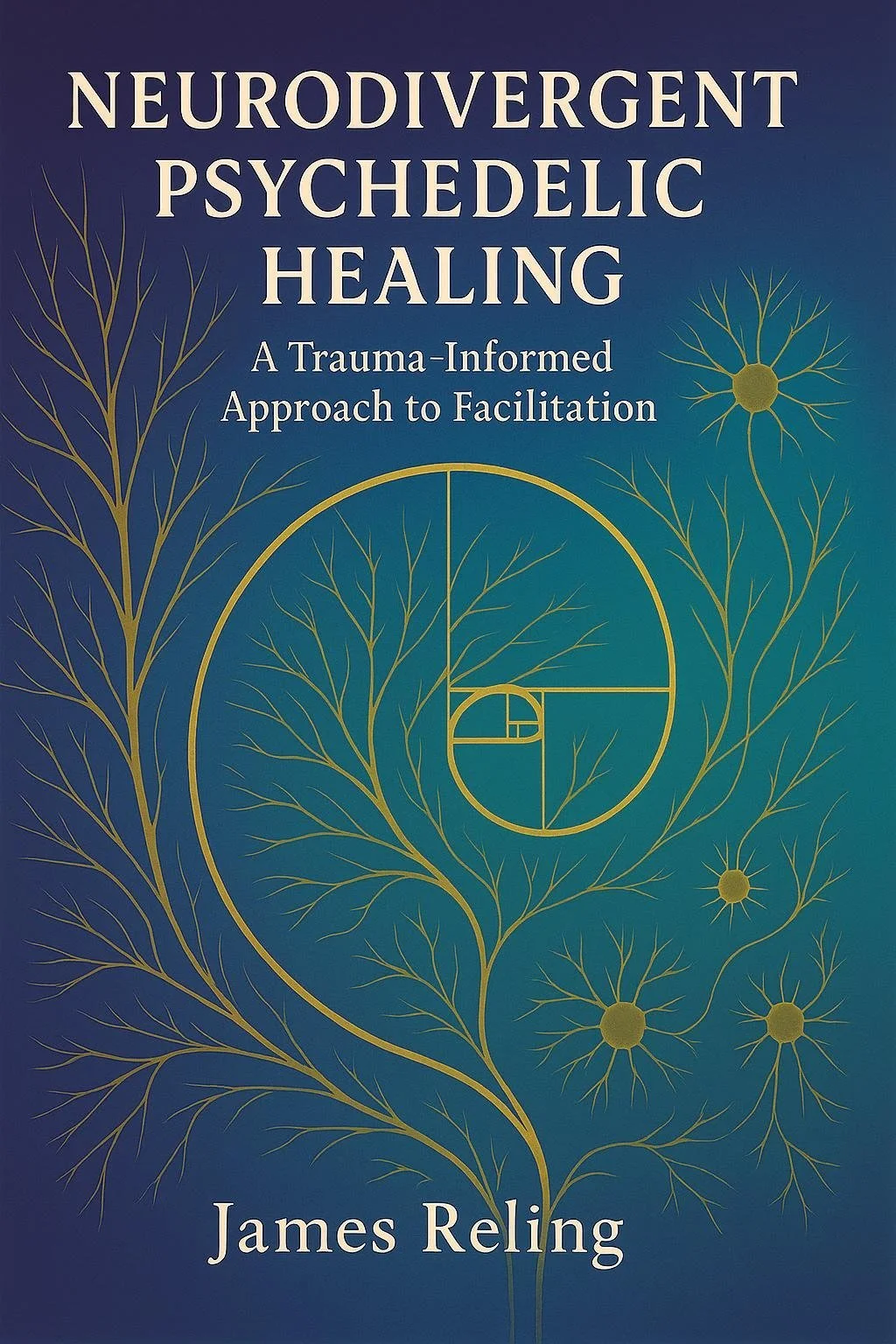
Why I Wrote Neurodivergent Psychedelic Healing: A Trauma-Informed Approach to Facilitation
Neurodivergent Psychedelic Healing did not begin with research or training. It began with feeling confused and misunderstood, and with a lifelong urge to understand what helps people feel safe in a world that often felt too loud and too fast for my nervous system. Growing up in the late 80s and early 90s, psychedelics existed in whispers and warnings, while books, zines, and underground culture hinted at something more complex. Years later, through challenging experiences and eventually naming my own neurodivergence, I began to see a gap where psychedelic spaces spoke about trauma and inclusion while overlooking neurotype differences. This book grew from that gap, offering language and harm-reduction practices for more attuned psychedelic care.

The Ketamine Papers: Science, Therapy, and Transformation (2016) - A Psychedelic Book Review
As a clinician who works with neurodivergent adults, I found The Ketamine Papers unusually satisfying. It bridges qualitative experience with scientific rigor, offering early trip reports, detailed protocols, and historical context that rarely appears outside professional training materials. It informed, surprised, and challenged me in ways few books on psychedelics have.
Music Is Directive: Rethinking Non-Directive Psychedelic Practice
Music is never a neutral backdrop in psychedelic therapy. Even the quietest drone or softest harmony can shape the body’s sense of movement, safety, and emotional direction. For neurodivergent listeners, who often perceive sound in sharper detail, those shifts can feel like guidance or intrusion. This article explores why music acts as a directive force in psychedelic sessions, how that influence intersects with autonomy and consent, and what facilitators can do to create soundscapes that support rather than steer the inner journey.

Journey Music for Psychedelic Playlists: James Murray — Weeds (2024)
Weeds turns patience into art—six quiet studies in resilience and renewal. James Murray’s understated ambient compositions unfold like breath, inviting presence and introspection. This series explores albums that function as companions for inner work—soundtracks that hold, mirror, and move with the listener through altered states.
Four Principles of Neurodiversity-Affirming Care - an excerpt from Neurodivergent Psychedelic Healing
Guiding others through psychedelic healing is sacred work. This first chapter of Neurodivergent Psychedelic Healing introduces four simple principles—collaboration, nonjudgment, curiosity, and flexibility—that help facilitators co-create safety with every client. When practiced with presence and care, these values expand what healing can look and feel like for all kinds of minds.
What happens when neuro-inclusion becomes the set and setting itself?