Who Holds the Sound? Reciprocity and the Music Behind Psychedelic Healing
A person lies down. Eyeshades on. Headphones resting lightly over their ears.
For the next several hours, music becomes the steadiest presence in the room. It carries them through fear, memory, and release, shaping the emotional arc in ways that are often felt more than noticed. Years later, a single track can bring the whole atmosphere back. The body remembers.
And yet, the people who made that possible are rarely part of the conversation.
The music stays. The artists often fade from view.
Future Directions in Music and Psychedelic Therapy: Adaptive sound environments, neurodivergent listening, and the evolving design of psychedelic care
As psychedelic care evolves, new approaches such as adaptive music systems, biofeedback-driven soundscapes, and personalized listening environments may reshape how therapeutic sound is designed. Researchers and clinicians are beginning to explore how music can adapt in real time to a participant’s emotional and physiological state. These developments suggest that the future of psychedelic therapy may involve not just medicine and psychotherapy, but the intentional design of responsive sound environments.
When Music Becomes the Bridge: Mystical Experience, Attachment, and Neurodivergent Psychedelic Healing
In many psychedelic journeys that lead to lasting change, there’s a moment when something opens. Time loosens. Meaning sharpens. These mystical states often mark the difference between an experience that fades and one that continues to shape a person’s life. They do not arise from medicine intensity alone, but from a nervous system that feels safe enough to let go. For many neurodivergent people, whose histories may include sensory overwhelm or chronic misattunement, that safety can be hard to access through direct relational engagement. Here, music becomes the bridge. As a low-demand, nonverbal presence, it can offer continuity and containment without requiring explanation or performance, opening pathways to surrender and meaning that are uniquely attuned to neurodivergent ways of experiencing the world.
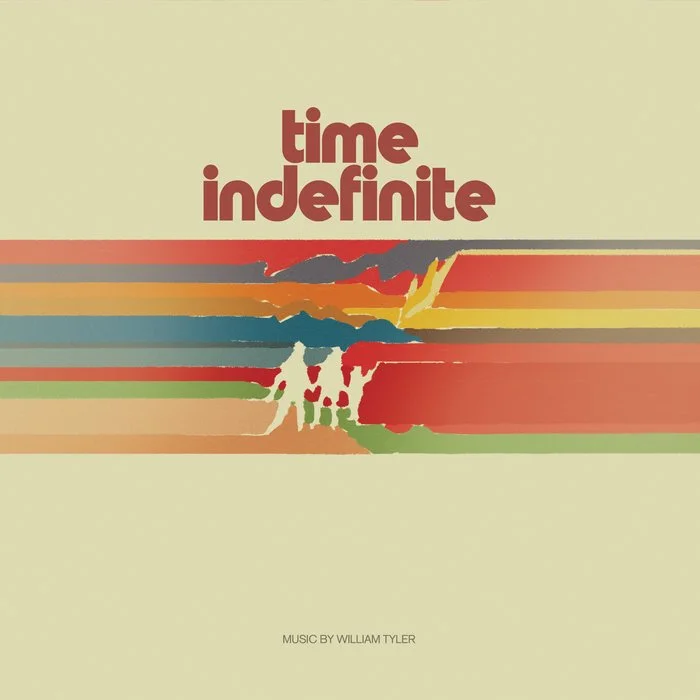
Journey Music for Psychedelic Playlists: William Tyler — Time Indefinite (2025)
Time Indefinite is William Tyler’s most adventurous and emotionally unsettling work to date. Built from cassette loops, phone recordings, warped guitar, and deep bass pulses, the album feels less like a collection of songs and more like a series of haunted rooms you move through. It opens with industrial noise and cinematic dread, then gradually reveals moments of warmth, nostalgia, and release, creating a soundworld that mirrors the nonlinear terrain of psychedelic experience.
Music Is Directive: Rethinking Non-Directive Psychedelic Practice
Music is never a neutral backdrop in psychedelic therapy. Even the quietest drone or softest harmony can shape the body’s sense of movement, safety, and emotional direction. For neurodivergent listeners, who often perceive sound in sharper detail, those shifts can feel like guidance or intrusion. This article explores why music acts as a directive force in psychedelic sessions, how that influence intersects with autonomy and consent, and what facilitators can do to create soundscapes that support rather than steer the inner journey.

Scoring the Journey Part Five: Quick Modality Notes — Soundscapes Across Medicines
Different medicines create different relationships with sound. Each alters time, emotion, and body awareness in its own way. This guide outlines how music interacts with psilocybin, LSD, MDMA, ketamine, and DMT—offering practical notes for facilitators working with neurodivergent clients. Drawing from research by Mendel Kaelen and others, it explores how tone, tempo, and texture can guide regulation, deepen surrender, and harmonize with each medicine’s rhythm.
Scoring the Journey Part Four: The Facilitator’s Ear — Embodied Listening and Ethical Presence
Facilitating with music begins with listening—to the self, the client, and the space between. This fourth part of Scoring the Journey explores the art of the facilitator’s ear: how to stay attuned, grounded, and ethically present so that music becomes a living dialogue rather than a fixed script.

Journey Music for Psychedelic Playlists: Helios — Veriditas (2018)
Helio’s Veriditas invites the listener into dreamlike, emotional terrain—music that feels both intimate and expansive. Its textures cradle the nervous system, supporting integration and reflection after the peak of a journey. This series explores albums that function as companions for inner work—soundtracks that hold, mirror, and move with the listener through altered states.

Scoring the Journey Part Three: Texture, Tone, and Technology — Tools for Ethical and Inclusive Soundscapes
Every playlist is built from texture—the grain of sound, the color of tone, the way vibration touches the body. Part Three of Scoring the Journey explores how timbre, layering, and technology influence safety and connection in psychedelic sessions, offering practical guidance for ethical and inclusive sound design.
Scoring the Journey Part Two: Mapping the Arc — Designing the Playlist by Journey Phase
Music in psychedelic healing follows an arc that echoes the body’s own rhythm—rising, peaking, and returning. This second part of Scoring the Journey explores how to design playlists that move with that natural contour, supporting neurodivergent participants through sound that breathes, steadies, and responds.
Scoring the Journey Part One: Building Playlists for Neurodivergent Psychedelic Healing
Music in psychedelic therapy does more than fill silence—it shapes how emotions, memories, and meanings move through the session. For neurodivergent participants, sound can be an anchor or an overwhelm, a safety or an intensity. This first part of Scoring the Journey lays the groundwork for playlist design that listens to the nervous system as much as the music itself.
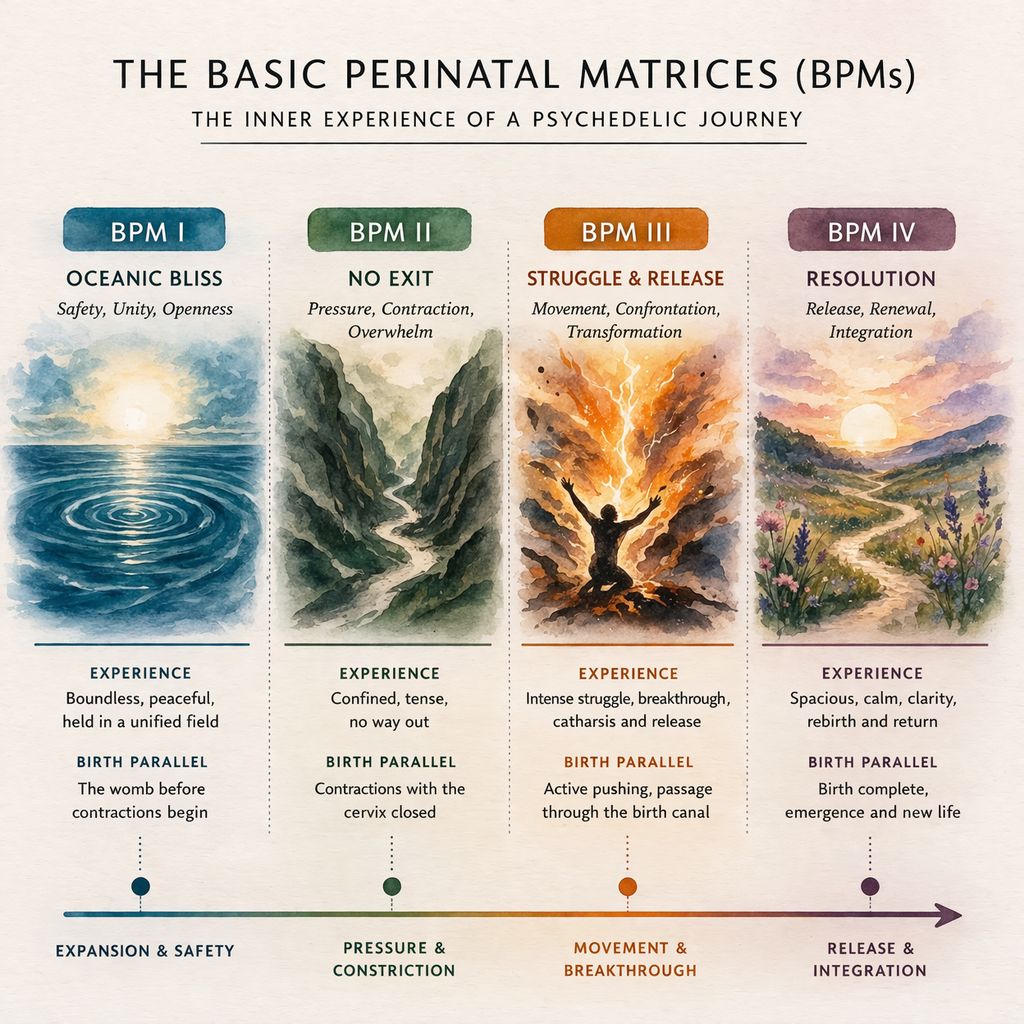
Contours of Sound: Mapping Stanislav Grof’s Basic Perinatal Matrices (BPMs) to Journey Phases and Music Choices
A track comes in low and slow, almost tidal, and the body begins to reorganize around it. Breath lengthens. The edges of the room soften. Over time, patterns start to repeat across journeys, described through maps like Grof’s Basic Perinatal Matrices (BPMs) and the Copenhagen Music Program (CMP). Each traces an arc of opening, pressure, movement, and return from a slightly different angle. When music is placed with care, it can move alongside that unfolding, steadying the nervous system, holding tension, and carrying energy as something inside begins to shift.